
Silicone Coated Fiberglass: The Flexible Solution for Irregular Insulation
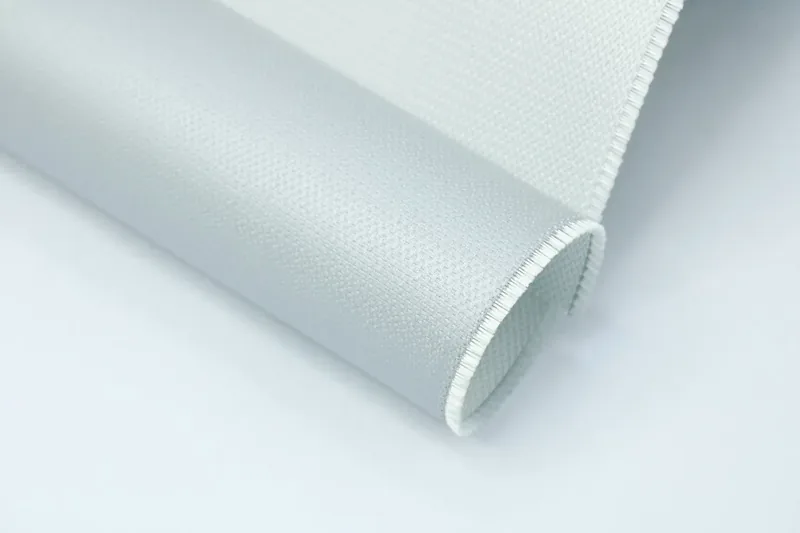
Walk through any industrial facility and you'll see the problem everywhere: valves, flanges, elbows, reducers, manhole covers, instrument ports. Irregular geometries that rigid insulation — mineral wool with metal jacketing — simply cannot wrap around. The standard answer is "we'll figure something out" or "just leave it exposed."
Neither is acceptable for safety, energy efficiency, or compliance. So what's flexible enough to wrap complex shapes, fire-rated enough to pass inspection, and tough enough to survive oil, water, and workshop conditions?
Silicone coated fiberglass fabric is built for exactly this.
How It's Constructed
Two layers, each doing a distinct job:
- Base layer: high-density E-glass fabric (3732 or 3784 specification). Inherently non-combustible, high-temperature resistant, carries the structural load and tensile strength. This is the skeleton.
- Surface layer: silicone rubber coating. Seals against moisture ingress, provides flexibility and foldability, resists oil and mild chemical exposure. This is the skin.
Take our standard 3732-580 specification as an example: finished weight 580g/m², 0.4mm thickness, Class A2 fire rating — meaning it won't ignite even when directly exposed to flame. Warp-direction breaking strength: 2151N. Weft: 1406N. For context, two workers pulling hard on opposite ends won't tear it.
For heavier applications, the 3784-1160 doubles the weight to 1160g/m² at 0.8mm thickness, with warp strength exceeding 2385N.
Coating Methods Matter
Same base fabric, different coating approaches, different results:
- Single-sided vs. double-sided coating. Single-sided leaves the reverse face with the original fiberglass texture — ideal when only one side contacts heat or oil. Double-sided applies silicone to both faces for better sealing, suited to outdoor or high-humidity environments.
- Liquid silicone vs. solid silicone. Liquid silicone penetrates deeper into the fabric weave, bonds more intimately, and produces a smoother surface finish. Solid silicone builds a thicker, more abrasion-resistant coating.
Real-World Applications
These aren't hypotheticals. Every application below comes from actual project experience:
Removable insulation jackets. Reactors, storage tanks, heat exchangers — equipment covered in flanges, manholes, agitator ports, thermocouple fittings. Rigid insulation can't adapt. With silicone fabric, you cut and sew a custom jacket matched to the equipment profile. Velcro or zipper closure. Need to open for inspection? Unwrap, inspect, wrap back on.
Steam pipe protective cladding. Wrap a steam line with a silicone fabric jacket, surface temperature drops to touch-safe levels. Workers brushing past won't get burned. Zippered designs mean periodic weld inspections don't require destroying the insulation.
Workshop heat shielding. Shield hot equipment and pipes with silicone fabric panels. Reduces ambient workshop temperature during summer months.
Color availability: grey, black (gloss or matte), and orange are standard production colors. Larger volumes can be custom-matched.
Need a solution for irregular equipment?
Tell us your operating environment — temperature, exposure conditions, equipment geometry — and our engineers will recommend the right silicone fabric specification.
Talk to an Engineer